


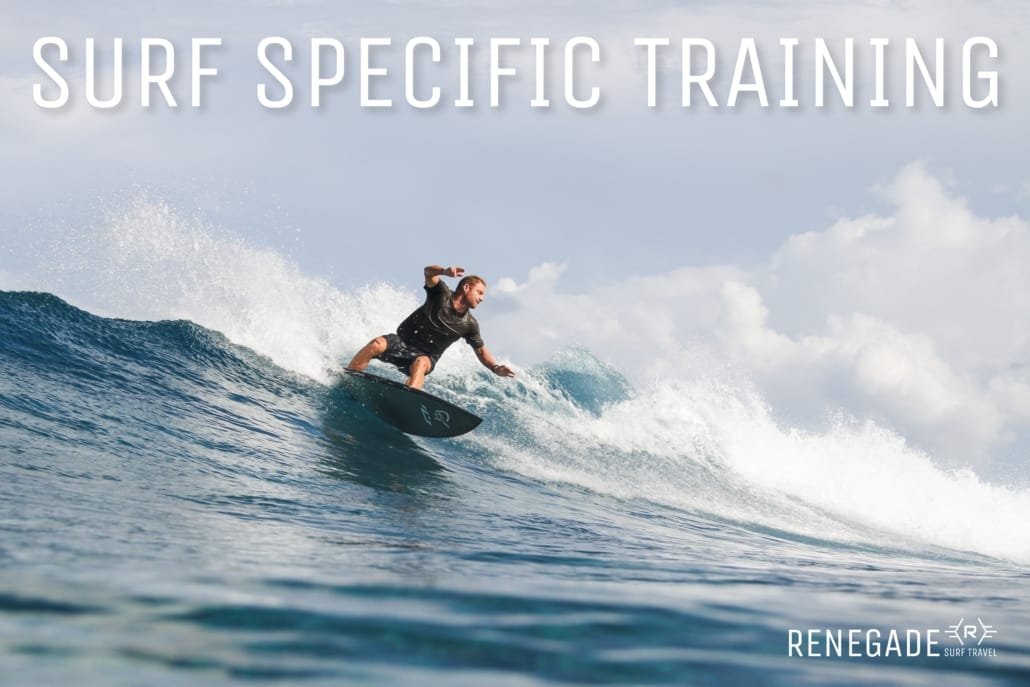


For the athletes at the top of our sport, the days of simply ‘surfing more’ to stay competitive are long gone. One scroll through Instagram and you’ll see almost every elite surfer working with coaches, following structured strength and conditioning programs designed to help them surf harder, recover faster, and stay in the water longer. Modern surfers are athletes of the highest caliber. A far cry from the fast-and-loose image that defined much of professional surfing up until the early 2010s.
Whilst 99.9% of us probably aren’t planning on donning a WSL rash guard anytime soon, there’s a lot we can learn from the world’s best surfers. Because the reality is this:
If you’re only surfing a few times a week, or perhaps even less (sorry to hear!), surf-specific training is the best investment you can make into ensuring you’re not wasting those precious hours in the surf.
Better paddling endurance. More power through turns. Faster pop-ups. Fewer injuries. Longer sessions. More waves. The last one is arguably the most important for lower level surfers. Catching 3 waves in a 2hr surf session isn’t conducive to making progress.
Plus, if you also end up building a bit of muscle, dropping some body fat, and becoming a stronger, more athletic human in the process… that’s a pretty solid bonus too.
Keep reading for our ultimate guide to surf-specific training.


A different physique from world champs of the yester-year…
Unfortunately, surf-specific training has developed a bit of a bad reputation… and honestly, fair enough. A quick Google search will throw up endless articles showing surfers wobbling around on Indo boards, BOSU balls, yoga balls, resistance bands tied to ceilings, all in the name of ‘balance’ and being ‘surf specific’.
And whilst these exercises might look surfy, the reality is most of them are massively overcomplicated and not particularly effective. They also don’t allow for any form of progressive overload which should be at the heart of any training program.
There’s a common misunderstanding that training for a sport means your gym exercises need to replicate the sport itself as closely as possible. But that’s not really how good strength and conditioning works.The gym isn’t there to simulate surfing. The gym is there to improve the physical qualities that allow you to surf better: Strength. Power. Mobility. Endurance. Coordination. Balance.
You don’t improve your bottom turn by standing on a wobble board doing squats with one eye closed. You improve it by becoming stronger, more explosive, more mobile, and more athletic overall — then taking those improved physical capabilities back into the ocean.


Intriguing? Definitely. Effective surf training? Definitely not.
WHAT EXACTLY IS ‘SURF SPECIFIC’ TRAINING?
Surf-specific training is simply the application of strength and conditioning principles to help surfers perform at their best for longer in the water.
Like ay individualised training program, how that actually looks like in practice will vary massively from surfer to surfer – there is no one size fits all approach.
A 16-year-old frother surfing five times a week and competing at junior level is going to need a very different program to a 40-year-old desk jockey turned weekend warrior trying to maximise two surfs a week.
That said, the fundamentals remain the same. Whether your goal is surfing heavier waves, paddling stronger for longer, recovering faster between sessions, or simply not feeling completely broken after a two-hour surf, there are certain physical qualities every surfer benefits from developing.
Below are five key training pillars we consider fundamental for surfers of all levels.
Nail these consistently, and your surfing will improve.
1. STRENGTH
Firstly, as surfers, we need to be strong. We need the ability to produce sufficient force and control our bodies efficiently. A 120kg Bench Press might get some looks in the gym, but isn’t going to add much to your performance in the water.
Upper body strength allows surfers to generate paddle speed. This is essential in matching the speed of the wave and ultimately increasing our wave count. Once you’re to your feet, lower body strength allows you to generate speed, stay stable through compressions, and throw buckets of water on our turns.
Another aspect of being strong which is often overlooked is it’s role in injury prevention. Strong muscles, tendons, and connective tissues help protect the joints and absorb force more effectively, essential when dealing with repeated duck-dives, heavy wipeouts, or free-falling from an 8ft lip like Medina at sunset.
OUR FAVOURITE EXERCISES…
For upper body strength, it’s hard to beat the humble pull-up. There are several studies showing a positive correlation between increased reps/weight on the pull up into both paddle strength and endurance. Besides building functional paddling strength, they improve shoulder resilience and help develop the lats – arguably the most important muscle involved in powerful paddling.
If you can’t yet do a bodyweight pull-up, bands or assisted machines are perfect. If you can do them comfortably, start adding weight.
Surfing also places huge demands on the posterior chain — essentially the entire backside of your body. During a two-hour surf, you’ll spend most of your time lying in spinal extension, squeezing your glutes and lower back while your arms repeatedly paddle overhead. Over time, weak posterior chain muscles are a fast-track to back pain, poor posture, and reduced power output.
Because of this, hip hinge movements are absolute gold for surfers. One of our favourites is the Single Leg Romanian Deadlift. It develops hamstring and glute strength, improves balance and coordination, and trains stability through the hips — all hugely valuable in surfing.
When training for strength, the goal should generally be heavier loads with lower reps, whilst always maintaining strict technique and controlled movement quality. Filming yourself or working with a coach can help with this.


The ‘B-stance Deadlift’ – a slightly more complex variation which is great for developing the posterior chain.
DON’T FORGET UNILATERAL WORK
Most surfers also have some level of imbalance throughout their body, meaning one side is noticeably stronger, more stable, or more coordinated than the other.
If you think about the demands of surfing, this makes perfect sense. If you’re a regular-footer surfing mostly right-hand point breaks, there’s a good chance your right leg is producing the majority of your force every single session. Thousands of tiny repetitions over years of surfing inevitably create asymmetries.
The problem is, over time these imbalances can begin to affect movement quality, reduce performance, and increase injury risk.That’s why unilateral (single-sided) training should be a staple in almost every surf-specific program.
Exercises like Bulgarian Split Squats, Single Leg Romanian Deadlifts, and Single Arm Rows force each side of the body to work independently, helping expose and improve weaknesses that would otherwise be hidden during bilateral movements.
As an added bonus, unilateral training also challenges balance, coordination, and stability — all hugely valuable qualities when your sport involves standing on a moving piece of foam travelling through moving water.

The Bulgarian Split Squat – great for improving single leg strength, core stability, hip mobility, and balance.
2. MUSCULAR ENDURANCE
Being able to move well with a lot of weight is impressive. But if you’re unable to perform the hundreds of repetitions required to paddle out on a solid day at your local beach break, your newly found strength ‘gainz’ become pretty useless in the water.
This is where muscular endurance differs from raw strength. Raw strength is your ability to produce maximum force for a short effort, like a heavy squat or deadlift. Muscular endurance is your ability to repeatedly produce force over longer periods without fatiguing. Think someone’s one rep max squat vs how many reps they can do with 75% of that number. In surfing, both matter, but endurance is often the limiting factor.
Your shoulders need to be capable of contracting over and over again without burning out halfway through a session. To improve this, we need more than just heavy, low-rep strength work. We also need lighter, higher-rep training that teaches the body to repeatedly produce force while resisting fatigue.
Supersets — performing one exercise immediately after another before resting — are fantastic for this. One of our favourites is pairing a ‘pull’ movement directly into a ‘push’ movement. Try Gorilla Rows (pictured) straight into push-ups with your hands still on the kettlebells. Elevating the hands allows you to sink deeper into the push-up, increasing shoulder range of motion while giving the chest a solid stretch at the bottom of each rep.


The Gorilla Row
3. CARDIOVASCULAR ENDURANCE
It’s no use being strong if you get out of breath walking up the stairs… your heart and lungs need to keep up, too.
If you’re not surfing multiple times per week, you’ll likely need to include some conditioning or cross-training sessions in your routine. These can be longer, slower efforts aimed at improving your aerobic fitness (exercise that relies on oxygen to fuel the muscles). The goal here is to improve your body’s ability to handle things like a long paddle out at your favourite point break without completely emptying the tank.
On the other end of the spectrum, shorter and more intense anaerobic efforts are equally important. This is the type of work that mirrors sprint paddling for a wave, quick recoveries, and repeated bursts of effort during a session. In surfing, you constantly move between these two systems, so training both is key if you want to surf longer, recover faster, and avoid feeling exhausted after the first paddle-out.
For those training at home, combining exercises that quickly spike the heart rate — such as Squat Jumps or Burpees — with ‘active recovery’ positions like the Plank can be a great way to mimic the peaks and troughs your heart rate experiences in the ocean. Think: sprint for a wave, paddle back out, then recover while sitting in the lineup.
And remember, conditioning doesn’t have to mean slogging away on a treadmill. Running, cycling, tennis, Jiu-jitsu, swimming or any other physically demanding hobby can all be fantastic forms of cross-training. The best conditioning program is often the one you actually enjoy enough to stick with.
4. MOBILITY
Mobility has become a bit of a buzzword in recent years. Defined as ‘the ability of a joint to move actively through a range of motion’ it differs from flexibility which is ‘the ability of a muscle or muscle group to lengthen passively through a range of motion’. In simple terms, mobility is about being able to control and produce force in those deeper, harder-to-reach positions.
Unsurprisingly, this is hugely beneficial for surfers. Take a simple roundhouse cutback. We rotate through the thoracic spine as far as possible in one direction before aggressively unwinding back the other way. The more movement and control we have through this area, the more potential we have to generate speed, power and flow through turns.
Surfing also regularly places our bodies in positions we rarely experience in day-to-day life. Improved mobility helps us access these positions more comfortably, stay stronger and more stable within them, and reduce our chances of injury.
Alongside the thoracic spine, the two other key areas surfers should focus on are the hips and shoulders. Not only are these joints heavily involved in surfing, they’re also some of the first to stiffen up thanks to modern sedentary lifestyles.
Our hips move through multiple planes of motion when popping up, compressing and extending to generate speed, or rotating through turns. Any extra range of motion , combined with strength and control in those ranges, can have a huge carryover to surfing performance. That’s why mobility work should be a key part of every surfer’s training program, not just an afterthought at the end of a session. There are plenty of exercises which can improve your strength and mobility in one hit. If you’re short on time, these are absolute gold….
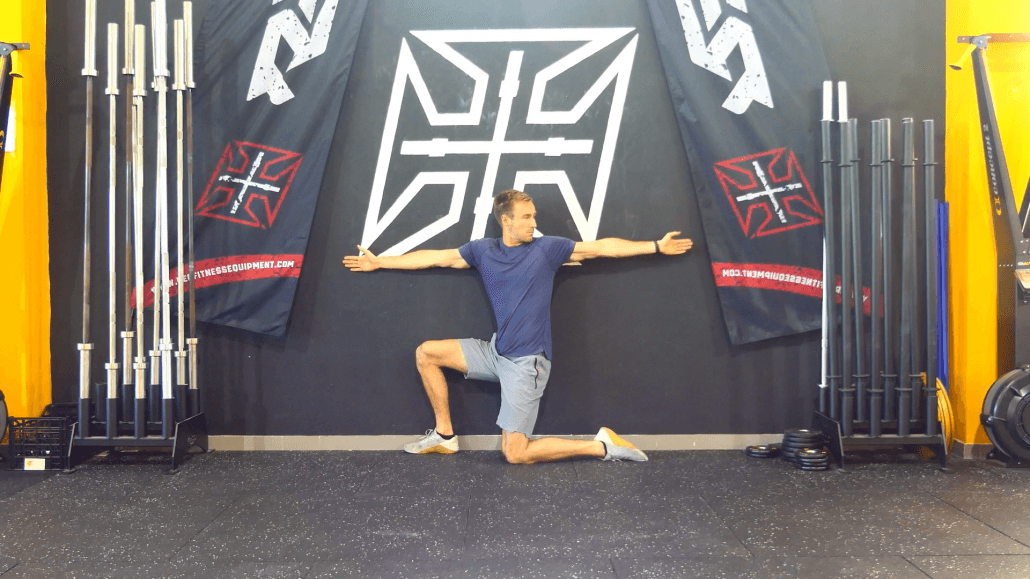
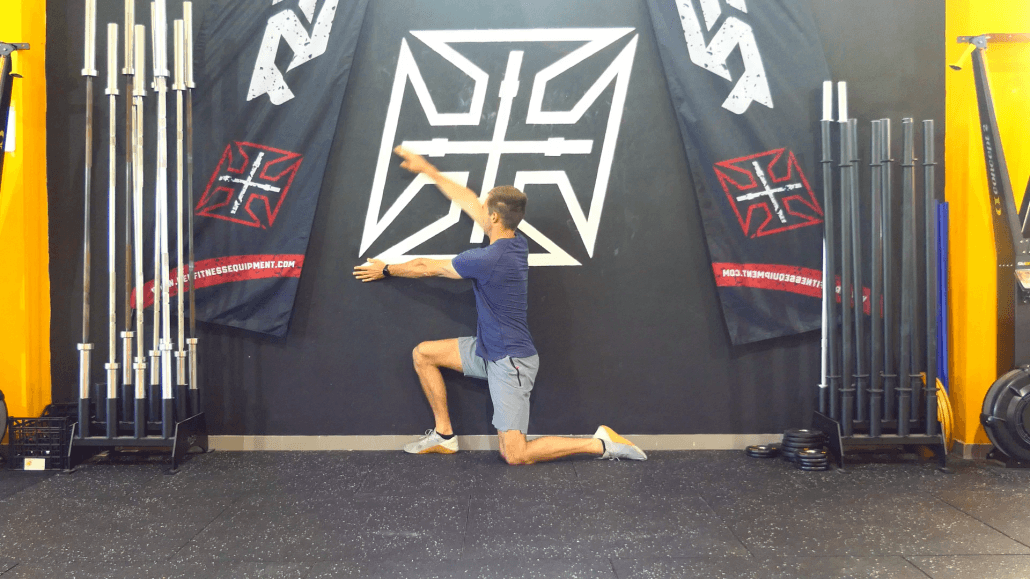

The thoracic spine rotation against a wall is great for opening up the chest, shoulders, back, core, hips and glutes.
5. REST & RECOVERY
Recovery is another area that most of us know we should spend more time on… but rarely actually do.
Foam rolling, ice baths, breathwork and similar recovery tools can all help improve how quickly your body bounces back from a surf or training session. But realistically, the most effective approach for most people is often the simplest one: consistently spending 5–10 minutes each day working on tight, sore or niggly areas before they develop into bigger problems.
Surfing places a huge amount of stress on the shoulders, hips, lower back and neck — especially during periods of consistent swell or on surf trips where you’re surfing multiple times a day. A small amount of regular maintenance can go a long way in helping you stay pain-free, move better, and continue performing at a high level both in and out of the water.
We offer mobility and stretching sessions during our Maldives Surf Coaching Trips — and trust us, after multiple surf sessions a day, your body definitely needs them.
WHY DO MOST TRAINING PROGRAMMES FAIL?
Now you know the fundamental elements a good surf-specific training program should include… why not just piece them together and make your own?
Well, firstly, effective programming is a skill that takes years to develop. Any workout can make you sweaty and sore, but creating a program that consistently improves the areas you actually want to progress in is a very different thing altogether.
Secondly — and for the same reason that ‘Get Ripped For Summer’ PDF you downloaded last March didn’t work — most people lack accountability. You could write the greatest surf-specific program on earth, but unless you’re unusually disciplined and consistent, the chances of sticking to it long-term are slim.
The human mind is funny like that. We naturally place more value on the things we invest in. ‘Skin in the game’, if you will. Many people know what they should be doing but need someone to ensure they actually get the work done.
And finally, many programs fail to apply the single most important training principle for long-term progress: Progressive Overload (PO) is defined as the gradual increase of stress placed on the body over time. Put simply: as you become fitter and stronger, your training needs to become more challenging too. Otherwise, your body has no reason to continue adapting.
There are several ways to progressively overload your training. Here are the 4 most common:
Lifting more weight
Week 1: Deadlift 50kg for 10 reps.
Week 4: Deadlift 70kg for 10 reps.
Completing more reps
Week 1: Deadlift 50kg for 10 reps.
Week 4: Deadlift 50kg for 15 reps.
This increases total training volume.
Slowing the reps down
Week 1: Deadlift 50kg for 10 reps with a 2-second lowering phase.
Week 4: Deadlift 50kg for 10 reps with a 4-second lowering phase.
This increases time under tension and muscular demand.
Improving movement quality
Week 1: Deadlift 50kg with poor mechanics and lower back pain afterwards.
Week 4: Deadlift 50kg with excellent form, no pain, and a body that feels good the next day.
This is one of the most overlooked forms of progression.
Imagine you ignore all of the above. In week 1, deadlifting 50kg for 10 reps feels like a 9/10 effort. Your body is forced to adapt. But by week 4, that exact same session now feels like a 5/10. The body no longer sees it as a significant challenge — it has essentially become your warm-up. Without increased demand, progress stalls, motivation drops, and you plateau.
That’s why effective programming isn’t just about working hard. It’s about applying the right amount of stress, at the right time, in the right way.
Finally, I feel the main reason most surfers don’t make progress in the gym is due to program hopping, or shiny object syndrome. They follow a plan for a week or two, get bored, then jump to another set of exercises, and repeat.
Any good training block should be followed for a longer period of time. The first weeks you complete the program, you’ll be finding the correct weights to use and perfecting the form. From weeks 3 onwards, you’ll be able to push the weights/reps, train close to failure, become mechanically competent at the movement, and start to see progress.
Some surfers I work with have been doing Bulgarian Split Squats for over 6 months and they’re still making progress week-on-week… starting at bodyweight for 6 reps with terrible form and now moving 40kg+ for 10 reps. This is where progress happens.
AN EXAMPLE TRAINING SESSION:
Fed up with training like a body builder, going from machine to machine and not making progress? Training is supposed to be FUN. Here’s an example of a full body Strength and Mobility session for surfers:
Warm up – 2 rounds:
- Duck Walks – 20m, into
- Sit Outs – 10 total, into,
- Childs Pose to Cobra – 8 reps.
Activation – 30s between rounds, 3 rounds:
- Half kneeling med ball slams – 5es – into,
- Seated vertical jumps – 3 reps (max effort)
Main Superse – 90s between rounds, 3 rounds:
- Dumbbell Bulgarian Split Squat (add a deficit if you’re well-trained). 6-8 reps. Last reps should be HARD!
- Deficit Push ups. 10-15 reps, 2s on way down, 2s pause at bottom.
Accessory work – rest as needed between sets:
- Chin Up (can be banded) – 6-10 reps
- Single Leg RDL (DB) – 6-8 reps each side
- Cable wood chop – 6 reps each side
Mobility circuit – 30s of each movement, 15s rest, 3 rounds:
- Cossack squat
- Burpee to Deep squat
- Kneeling Reachovers
READY TO LOCK IN?
Renegade Co-owner (@dalewallington) has worked with over 500 surfers over the last four years. His fully remote coaching program is built around a bespoke 1-to-1 approach that helps surfers identify and improve their weaknesses, build athleticism, and level up their nutrition — all while having the accountability needed to actually stay consistent and make long-term progress. Performing better in the water is at the heart of every program.
If you want to know more, please check out Dale’s Website here, or you can reach him on WhatsApp here.
GOT QUESTIONS?
If you’ve any questions on the points above or would simply like to chat about surf training, feel free to get in touch below.